Why converted warehouse hotels in the Netherlands feel so compelling
The most memorable luxury stays in the Netherlands rarely start with a new-build hotel. They begin in an industrial heritage building where grain once shifted, steel beams carried noise, and Dutch engineers thought more about function than fragrance. In a country where land is scarce and history is dense, the decision to convert rather than demolish is not a design trend; it is a pragmatic philosophy that shapes how you will experience each city at night.
Across the Netherlands, former factories, a water tower or an old warehouse on a quiet street now host guests who book online specifically for the story behind the walls. Adaptive reuse here is not cosmetic, because architects reinforce the industrial structure, preserve the warehouse shell and then carve generous rooms that respect the original architecture. As one heritage organization explains without embellishment, “What is adaptive reuse? Repurposing old buildings for new uses while preserving their features.”
For travelers comparing converted warehouse hotels across the Netherlands, the appeal is twofold and very human. You gain the comfort of a contemporary hotel room while sleeping inside an industrial site that once powered the city economy. You also tap into a national commitment to sustainable development, where reusing brick, steel and Dutch water-facing foundations reduces waste and keeps the urban fabric legible for the next generation.
Rotterdam’s industrial icons: from post office counters to skyline suites
Rotterdam is the clearest argument for choosing a converted warehouse hotel in the Netherlands when you care about architecture. The city rebuilt itself with concrete and glass after wartime destruction, yet its most interesting hotel conversions keep one foot in the past and one in a very design-led present. If you are drawn to industrial silhouettes, a tower on the river or an unusual crane on the skyline, this is where to start.
Kimpton Rotterdam, housed in the former POST building on Coolsingel, turns a monumental post office completed in 1923 into a warm, layered hotel without sanding away its industrial character. The heritage building, renovated by Office Winhov and opened as a hotel in 2023 with 231 rooms, is often cited in Dutch architecture media as a masterclass in how to retain stone arches, steel framing and three floors of lofty halls while inserting contemporary comforts. Wax seal motifs, brass details and a calm restaurant in the old sorting hall make it a natural anchor for any itinerary focused on Rotterdam’s architectural hotels, and you can read a deeper design analysis in our guide to where to sleep inside Dutch design in Rotterdam.
Down by the water, Hotel New York occupies the former Holland America Line headquarters, a brick and stone warehouse hotel that once processed emigrants heading for New York between 1901 and 1971. Since opening as a hotel and restaurant in 1993, it has become a Rotterdam landmark where you stay in rooms that look over Dutch water and the city’s working docks, with the restaurant buzzing from breakfast until late night as locals treat it as their living room. For many guests, the building’s industrial heritage matters as much as the pillow menu, because sleeping here connects your own journey to the thousands who left this industrial site by ship.
Amsterdam’s cranes, bridge houses and canal side conversions
Amsterdam has become shorthand for canal houses, but its most intriguing luxury stays sit in former industrial structures just beyond the postcard views. Travelers searching for converted warehouse hotels in the Netherlands often start near Amsterdam Central, then quickly realize the city hides far more unusual possibilities along the water. The key is to look where industry once met Dutch water, from shipyards to a solitary crane Amsterdam silhouette now reborn as a vertical retreat.
On the northern waterfront, an old Amsterdam crane has been transformed into a dramatic tower with only a handful of suites stacked across three floors. Known locally as an Amsterdam crane hotel, it offers a compact lift ride through the steel frame to reach a cocoon of timber, glass and soft textiles that contrast with the raw industrial shell. At night, you stay suspended above the water, watching ferries cross between Amsterdam Central and the former industrial site, an experience that justifies the premium rates for many solo travelers seeking an amsterdam unusual place to sleep.
Elsewhere in the city, Space&Matter’s SWEETS project turns redundant bridge houses into miniature hotel rooms scattered along the canals, each one a tiny heritage building with its own story. These are not warehouse hotel conversions in the strict sense, yet they share the same industrial heritage logic and offer an Amsterdam unusual way to sleep almost on the water itself. If you want a broader sense of how the city handles waterside hospitality, our insider guide to sleeping on the water in Amsterdam pairs well with scouting these smaller industrial gems.
Inside the design language: industrial bones, Dutch minimalism and warm service
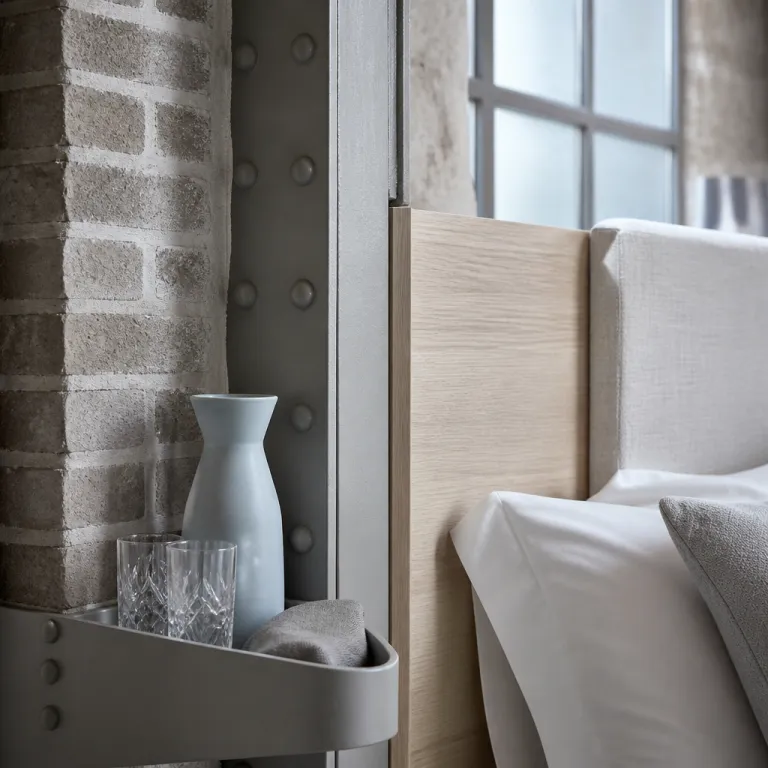
Step into any of the leading converted warehouse hotels in the Netherlands that travelers talk about, and a pattern emerges. The public spaces keep industrial bones visible, from exposed brick and steel columns to gantry cranes left in place as sculptural elements. Private rooms then soften the story with natural wood, thick textiles and lighting that flatters both the guest and the architecture.
Architects such as UC Architects, Broekbakema and Engelman Architecten have built reputations on this balance between preservation and comfort. UC Architects turned a former printing house in The Hague into a refined hotel, keeping the industrial presses’ volume while carving intimate rooms and a street-facing restaurant that reconnects the building to the city. Engelman Architecten’s work on Het Arresthuis in Roermond, a former prison reopened as a design hotel in 2011 with 105 rooms, shows how even the most rigid industrial site can become a welcoming place to stay, with cells combined into generous suites that still hint at their past.
For guests, the design language matters less as theory and more as feeling. You notice how a warehouse hotel uses three floors of open atrium to pull daylight deep into the plan, or how a water tower conversion frames views of Dutch water and flat polder fields. You also sense the Dutch preference for direct, unpretentious service, where the hotel will lend you a bicycle without fuss and point you to a neighborhood restaurant rather than push room service.
The pipeline: where industrial heritage is heading next in the Netherlands
Converted warehouse hotels across the Netherlands are not a closed chapter; they are an expanding network of places to sleep inside history. Industry observers note that dozens of industrial buildings have already been converted to hotels, often achieving high occupancy rates that signal strong demand from travelers who value narrative-rich stays. That success encourages investors and local governments to keep scanning the skyline for the next promising tower, warehouse or water tower.
In the Zaanstreek region north of Amsterdam, former factories behind the famous green wooden facades are being reimagined as mixed-use complexes where a hotel, restaurant and cultural spaces share one industrial site. Broekbakema’s work on the KVL leather factory in Oisterwijk, completed in stages from 2014 onward, shows how such complexes can combine heritage building preservation with new economic life, and similar strategies are now being explored for grain silos and riverside warehouses along Dutch water. In Haarlem, the Jopen Brewery’s conversion of a Gothic church into a brewery restaurant hints at how hospitality can anchor these projects, even when the primary function is not a hotel.
For travelers, the practical takeaway is simple and actionable. Book online early if you want a specific warehouse hotel or an Amsterdam unusual crane suite, because these rooms are limited and occupancy is high throughout the year. If you are also interested in wellness-focused conversions, our guide to what makes a great Dutch spa hotel shows how former industrial buildings are quietly becoming some of the country’s most atmospheric bathing destinations.
How to choose and book the right industrial conversion for your trip
Choosing between converted warehouse hotels in the Netherlands starts with clarifying what you want from the building itself. If you care about skyline drama and an unusual sense of height, a crane Amsterdam suite or a converted water tower on the edge of a city will feel more exciting than a low-rise warehouse on a quiet street. If you prefer generous public spaces and a strong restaurant scene, look for a larger warehouse hotel or heritage building with three floors of lounges, bars and co-working corners.
Location remains crucial, especially in Amsterdam and Rotterdam where industrial heritage often sits just beyond the tourist core. A hotel near Amsterdam Central makes it easy to walk or cycle everywhere, while a property on a former industrial site across the water trades convenience for views and a calmer night. In smaller cities, staying inside a converted factory or tower usually places you within walking distance of both the historic center and newer cultural districts.
When booking online, read beyond the design language and focus on practical details. Check how many rooms the hotel offers, whether every hotel room benefits from the industrial architecture or only a few signature suites, and how the property handles noise from nearby street life or working docks. Then decide whether you want to stay in a place where the industrial story is the main event, or simply a beautifully resolved backdrop to your wider Dutch itinerary.
FAQ
What is adaptive reuse in the context of Dutch hotels?
Adaptive reuse means taking an existing industrial or commercial building and converting it into a new function, such as a hotel, while preserving key architectural features. In the Netherlands this often involves turning warehouses, factories, a water tower or even a former prison into high-comfort accommodation. The goal is to protect industrial heritage, reduce construction waste and keep the city’s history visible in daily life.
Are converted warehouse hotels in the Netherlands more expensive than regular hotels?
Prices vary widely, but many converted warehouse hotels in the Netherlands position themselves in the premium or luxury segment because of their unique architecture and limited number of rooms. You pay for both the design and the narrative of staying inside an industrial heritage building. That said, some properties offer competitive rates outside peak periods, especially if you book online well in advance.
Which Dutch cities are best for staying in converted industrial buildings?
Amsterdam and Rotterdam offer the highest concentration of converted industrial hotels, from crane Amsterdam suites to waterfront warehouse properties. Smaller cities such as Roermond, The Hague and Haarlem also feature notable conversions, including a former prison and a printing house turned into a refined hotel. Emerging regions like Zaanstreek are beginning to add factory-based stays to the national mix.
How far in advance should I book a room in a converted warehouse hotel?
Because many converted warehouse hotels in the Netherlands have relatively few rooms, they often reach high occupancy even outside traditional holiday seasons. Booking at least several weeks ahead is sensible for major cities, while unique properties such as a crane or water tower conversion may require planning months in advance. If your dates are fixed, flexible cancellation policies are worth the small premium.
What should I look for when choosing an industrial heritage hotel?
Focus on how the hotel balances original industrial features with comfort, paying attention to room size, natural light and noise insulation. Check whether the most striking spaces, such as double-height halls or views over Dutch water, are accessible to all guests or reserved for a few suites. Finally, read recent guest feedback to confirm that service quality matches the architecture, because design alone will not carry a stay.