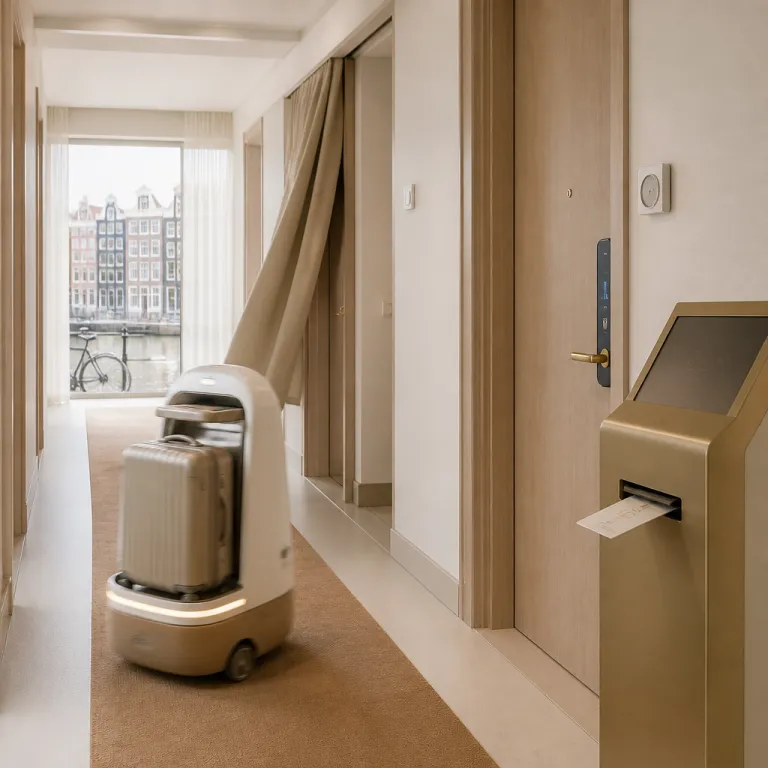
Amsterdam hospitality technology innovation as a new kind of luxury
Amsterdam’s hospitality technology ecosystem is quietly changing what luxury means in the Dutch capital. For a business leisure traveler, the most valuable detail is often not the art on the wall but how smoothly the hotel adapts to a late arrival, an early meeting and a same day canal cruise. In Amsterdam hotels, digital systems are increasingly the discreet layer that turns those shifting plans into a seamless guest journey.
The city’s role as a European internet hub and startup magnet has made it a natural test bed for hotel technology and digital innovation. Local hotel groups work with homegrown platforms such as Mews, whose unified property management system was founded in 2012 and grew from an Amsterdam base to simplify management, revenue optimization and day to day operations across multiple hotels and resorts. This is hospitality innovation in practice: a hotel group can adjust strategy, pricing and staffing in real time, while the guest simply experiences a room that is ready, a key that works and a bill that is correct.
For travelers booking premium hotels in the Netherlands, this shift matters. You are no longer just choosing a hotel; you are choosing a level of technology maturity that will shape your stay from the first click to the final invoice. The most advanced hotel tech ecosystems in Amsterdam use data responsibly to refine guest experiences, improve operational efficiency and support a future hotel model where service feels more personal, not less.
From citizenM kiosks to fully connected hotel operations
The modern story of Amsterdam hotel technology often starts with citizenM, the Dutch founded brand that made self check in kiosks feel normal rather than experimental. What began as a bold piece of hotel tech in Amsterdam in the late 2000s has become a global template, showing how automation can shorten queues while staff focus on higher value guest experiences. For business leisure travelers, that means less time at reception and more time settling into a room that already reflects their preferences.
Across the city, other hotels have pushed the concept further, each adding a layer to this hospitality industry laboratory. YOTEL Amsterdam built its reputation on self service kiosks and compact smart rooms, while QO Hotel Amsterdam introduced in room tablets that allow guests to control lighting, temperature and entertainment from a single interface, turning technology into a quiet concierge. Postillion Hotel Amsterdam went another step with voice controlled rooms, where a spoken request can adjust the environment, order services or surface practical details about the hotel and neighborhood.
Case study: measurable impact of self service check in
Publicly shared benchmarks from European hotel groups using kiosk and mobile check in frequently report average check in times falling from around eight minutes to under three minutes per guest, while guest satisfaction scores for arrival experience rise by several percentage points. In Amsterdam properties that combine kiosks with mobile keys, internal audits often show front desk queues reduced by more than half during peak hours, allowing staff to focus on complex requests rather than routine administration.
Behind these visible touches sits a deeper digital transformation of hotel operations. Platforms such as the Mews operating system connect reservations, payments, housekeeping and reporting, giving every senior manager and general manager a single source of truth for data driven management. When a director of operations or director of revenue in a hotel group can see live performance across several hotels, they can refine revenue strategy, staffing and maintenance without disrupting the guest journey, which is the real promise of hotel technology in Amsterdam.
For readers interested in how this connects to the wider Dutch market reset, our analysis of the pipeline transforming luxury hotel booking in the Netherlands explains how tech innovation is reshaping which properties reach the premium segment. Those shifts in supply and positioning are closely tied to Amsterdam’s digital hospitality tools, as hotel groups invest in systems that can support both business and leisure demand with equal finesse. When you choose a tech forward property in Amsterdam, you are often choosing a hotel that is already aligned with this future hotel landscape.
Invisible systems, visible comfort: what guests really feel
From the outside, Amsterdam’s hospitality technology scene can sound abstract, full of jargon about data, platforms and digital transformation. On the inside of a well run hotel, it feels like something very simple: everything just works, and it works in a way that respects your time. The most advanced hotels in Amsterdam use technology to remove friction rather than to showcase gadgets, especially around check in and daily routines.
Take nhow Amsterdam RAI, a 650 room design led property that handles large conference flows without losing its sense of ease. Smart hotel management tools help the senior manager and general manager coordinate check in waves, meeting room turnovers and late night arrivals, so the lobby never feels overwhelmed even when events spill out of the nearby RAI convention center. At Hotel Breeze Amsterdam, a nearly zero energy property built around the Earth, Wind and Fire concept, energy efficient systems quietly regulate climate and lighting, proving that sustainability and guest comfort can coexist in a single hotel experience.
Case study: sustainability metrics in Amsterdam hotels
According to publicly available project documentation and press materials, pioneering Dutch hotels that combine smart building management with renewable energy solutions often report double digit reductions in energy use per occupied room compared with older properties of similar size. In Amsterdam, early adopters of intelligent climate control and predictive maintenance have also cited lower unplanned downtime for critical systems and a measurable drop in guest complaints related to temperature or noise.
For travelers, the most telling details are often small. A room that is at the right temperature on arrival, a key that is already activated on your phone, a bill that reflects your corporate rate without a conversation at the desk: all of these are outcomes of carefully designed hotel operations and integrated hospitality technology. When a hotel group uses connected systems, the guest journey becomes a continuous line from booking engine to breakfast table, rather than a series of disconnected sessions with different teams.
This is where Amsterdam’s tech leadership intersects with design and service culture. At YOTEL Amsterdam, for example, self service kiosks handle the basics while staff circulate as hosts, ready to solve issues that no algorithm can anticipate. In canal side properties such as the reimagined Quentin Canal House, digital tools manage reservations and revenue in the background, leaving the visible focus on architecture, art and a sense of place that feels unmistakably Amsterdam.
Why Amsterdam leads Europe in hospitality technology and strategy
Amsterdam’s rise as a center of hotel technology innovation is not accidental. The city combines one of the highest internet penetration rates in Europe with a pragmatic, design minded culture that treats technology as a tool rather than a spectacle. For hotel groups, this creates an ideal environment to test new hotel tech while maintaining the understated service that luxury travelers expect.
Academic institutions such as TU Delft and the University of Amsterdam contribute research on sustainability, user experience and data ethics that feeds directly into hospitality industry projects. When a vice president of innovation or a director of hotel technology at a European hotel group looks for partners, Amsterdam’s ecosystem of startups, universities and established players such as Mews offers a complete panel of expertise. Events like Unfold at Muziekgebouw, widely reported as launching in 2022 as an annual hospitality technology forum, bring together senior managers, general managers and revenue leaders from hotels and resorts across Europe for sessions on AI concierge tools, dynamic pricing and automated housekeeping, turning the city into a live classroom for future hotel concepts.
For travelers, this ecosystem translates into more thoughtful guest experiences. A hotel that participates in these conversations is more likely to handle your data with care, using it to personalize your stay rather than to bombard you with irrelevant offers. When you read about a panel on operational efficiency or a strategy session on digital transformation at an event such as IHTF or Unfold, the outcomes often appear months later as subtle improvements in how Amsterdam hotels manage check in, room preferences and loyalty recognition.
Our long form report on how the Dutch hotel market is resetting shows how these forces are reshaping ownership structures and investment priorities. Behind every renovated lobby or refreshed room category, there is usually a parallel upgrade in hospitality technology and management systems that supports better revenue performance and smoother guest journeys. Amsterdam’s role as Europe’s hospitality innovation lab means that changes tested here often spread quickly to other capitals, so understanding this city’s tech landscape is a way of reading the future of high end travel across the continent.
The tension between automation and high touch service
For all the enthusiasm around digital hospitality tools, the most interesting conversations in the Dutch capital focus on limits. Luxury travelers are willing to embrace automation when it clearly improves speed, accuracy or privacy, but they are unforgiving when technology gets between them and a meaningful human interaction. The best Amsterdam hotels understand that the goal is not to remove staff but to free them from repetitive tasks so they can act as true hosts.
In practice, this means using hotel tech to handle what machines do best and people do not. Dynamic pricing engines can adjust revenue strategy across a hotel group in response to live demand data, while a senior manager focuses on staffing the lobby with multilingual hosts who can solve complex issues. Automated housekeeping schedules can optimize operational efficiency and reduce energy use, but a general manager still walks the corridors, checking details that no dashboard can fully capture.
Events such as Unfold and IHTF often stage a panel where a vice president of operations, a director of hospitality technology and a manager from OREA Hotels or another European chain debate this balance. One recurring theme is that the future hotel will be defined less by the number of devices in the room and more by how invisible the systems feel during the guest journey. As Amsterdam based strategist and author of several hospitality technology white papers, Marieke van der Veen, has argued in public conference sessions, guests increasingly “expect technology to disappear into the background and leave only a sense of calm, competent service.”
For travelers booking through a premium platform such as mynetherlandsstay.com, the practical takeaway is clear. When you evaluate hotels in Amsterdam or elsewhere in Europe, look beyond the headline features and ask how hospitality technology supports the specific guest experiences you value most. A hotel that treats tech innovation as a means to deepen hospitality, rather than as a marketing slogan, is far more likely to deliver the quiet, confident service that defines true luxury.
FAQ
How is Amsterdam hospitality technology innovation changing the check in experience ?
Amsterdam’s hotel technology has made check in faster and more flexible, especially for business leisure travelers arriving outside standard hours. Self service kiosks at properties such as citizenM and YOTEL Amsterdam allow guests to check in, choose rooms and create keys in minutes, while mobile pre check in lets frequent travelers bypass the front desk entirely. Behind the scenes, integrated hotel operations systems ensure that room status, payments and preferences are synchronized, so the process feels smooth rather than experimental.
Which Amsterdam hotels are leading in sustainable hospitality technology ?
Hotel Breeze Amsterdam is a standout example, using an Earth, Wind and Fire inspired design to reduce energy consumption while maintaining comfort. Many other Amsterdam hotels now integrate energy efficient systems, smart climate control and data driven maintenance to lower their environmental impact without compromising the guest experience. For travelers, this means you can choose a high end hotel that aligns with both your comfort expectations and your sustainability values.
What should I look for when booking a tech forward luxury hotel in Amsterdam ?
Start by checking whether the hotel uses integrated hospitality technology platforms that connect reservations, payments and room management, as this often signals a more seamless guest journey. Look for clear explanations of how the hotel uses guest data to personalize stays, such as remembering pillow preferences or arrival times, rather than vague claims about innovation. Finally, read recent reviews to see whether guests mention both efficient operations and attentive staff, because the best digital hospitality solutions always support human service rather than replacing it.
Does more hotel technology mean less personal service ?
In well run Amsterdam hotels, the opposite tends to be true. When hotel tech handles repetitive tasks such as key creation, billing and basic information requests, staff have more time to engage with guests in a meaningful way. The key is thoughtful management; properties that treat technology as a tool to enhance hospitality usually deliver both higher operational efficiency and a warmer, more tailored experience.
Are Amsterdam’s tech innovations influencing hotels in the rest of Europe ?
Yes, many of the systems and concepts tested in Amsterdam are now being adopted by hotel groups across Europe. Self check in kiosks, unified operating platforms and data informed revenue strategies that began in Dutch properties have become reference points for resorts and urban hotels in other capitals. For travelers, this means that understanding Amsterdam’s hospitality technology innovation offers a useful preview of how high end stays will feel in other European cities over the coming years.