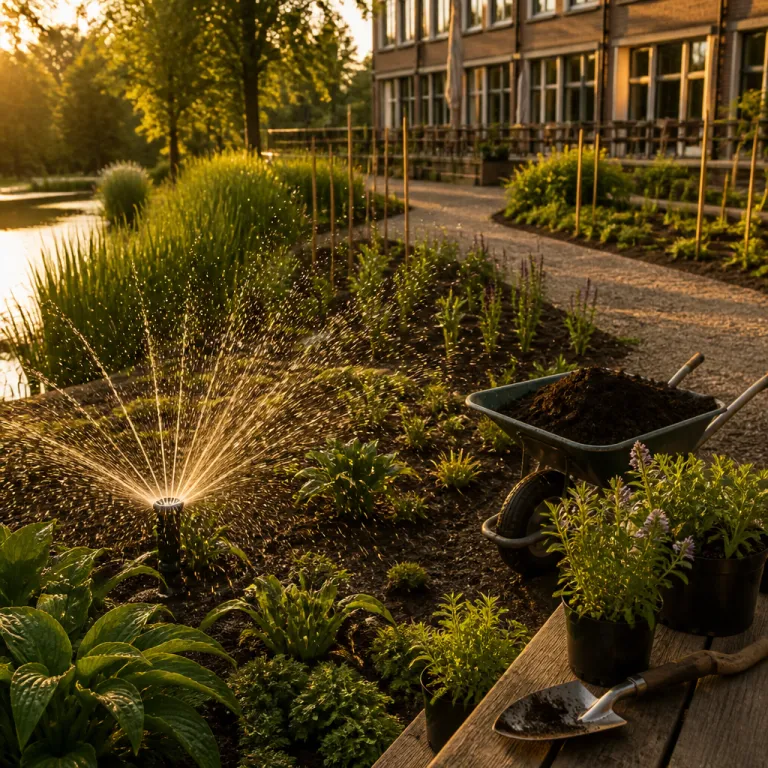
The quiet revolution of hotel gardens in the Dutch countryside
In the Netherlands, the most memorable luxury hotel stays often begin outside. Many travelers arrive expecting a design hotel lobby in a historic city centre, then realize the real story unfolds in the landscaped grounds of rural Dutch estates. When the first view from your room is a canal reflecting dawn light over fields, you understand why these places stay with you long after check out.
This is where the Dutch concept of the landgoed, or country estate, reshapes what a countryside hotel can be. Unlike an English country house hotel or a French château, a Dutch country estate is defined as much by water management and working landscapes as by architecture, so the best hotels in the Netherlands treat their gardens as living infrastructure. You see it in the way ponds double as ecological filters, in canals that guide you from hotel restaurant terrace to orchards, and in walking paths that connect rooms to nature rather than to a car park.
Across the Dutch countryside, from Limburg to Drenthe, a new generation of properties is quietly centering the landscape as the primary amenity. Hotels such as Bilderberg Château Holtmühle, Landgoed Duin & Kruidberg, and Landgoed Zonheuvel show how medieval walls and English style gardens can coexist with contemporary sustainability. Industry listings and regional tourism boards currently highlight a small but growing group of hotels with notable gardens in the Netherlands, and that emerging cluster is shaping how discerning couples plan their booking strategies for romantic rural escapes.
The landgoed tradition: where water, fields and design define the stay
To understand country house hotels in the Dutch countryside, you need to understand the landgoed tradition. A Dutch country estate is not just a manor with lawns; it is a carefully engineered landscape where canals, ponds and fields are designed as one coherent system. Centuries of water management expertise, which once protected cities like Amsterdam and The Hague, now shape how many luxury hotels lay out their gardens, walking routes and even their outdoor restaurants.
At Bilderberg Château Holtmühle near Tegelen, the medieval castle hotel is encircled by water, with grounds that feel both defensive and deeply romantic. Paths curve around the moat, leading from the main hotel restaurant to quieter corners where you can sit with a glass of Limburg wine and watch the reflections of trees in the water. Landgoed Duin & Kruidberg, located near the Dutch coast, layers English style gardens over old dune landscapes, so your walk from room to lake passes through formal parterres, wilder nature and shaded woodland in a single loop.
These landgoed hotels are not about a single spectacular tulip field or a postcard view of windmills. They are about sequences of spaces, where one moment you are crossing a small bridge over a canal and the next you are in orchards or near grazing fields that still function as part of the estate economy. For travelers interested in how Dutch cuisine is evolving from farm to table, these estates pair beautifully with a deeper dive into regional food culture, including the Food Valley region and other agricultural hubs. The result is a style of countryside hospitality where the landscape is not a backdrop to the hotel but the main reason to stay there.
From Keukenhof gardens to tulip fields: when flowers frame the hotel experience
Many travelers first encounter rural hotel landscapes in the Netherlands through the lens of tulip season. They plan a trip around Keukenhof Gardens, check the bloom forecast for the tulip fields, then start looking for hotels located between Amsterdam and The Hague that balance access to the city with immersion in nature. The best hotels in this belt understand that guests want both a refined room and a sense of waking up inside the landscape they came to see.
Staying near Keukenhof Gardens is not only about being close to the entrance gate. A well chosen hotel in the Dutch countryside here will offer bicycles, quiet lanes through fields and small canals that mirror the flower rows at sunrise, when the bus tours have not yet arrived. Couples who time their booking for April, at the start of the spring season, often enjoy softer light, fewer crowds and the chance to walk from their rooms directly into paths lined with blossom trees, rather than only the more famous tulip fields.
It is worth remembering that tulips are just one chapter in the floral calendar of Dutch estate gardens. After the intense color of April, many properties shift focus to roses, herbaceous borders and kitchen gardens that supply the hotel restaurant with herbs and vegetables. If you are planning a longer itinerary that combines city and countryside, consider pairing a few nights near Keukenhof with time in Amsterdam or The Hague, then returning to rural hotels elsewhere in the Netherlands later in summer, when the gardens are lush, the days are long and the landscape feels less like a spectacle and more like a lived in environment.
Beyond Amsterdam: how to reach countryside estates without losing time
One reason many American travelers hesitate to book a stay on a Dutch country estate is logistics. They picture landing at Amsterdam Airport Schiphol, taking a bus or train into Amsterdam Central Station, then feeling locked into a city break. In reality, the Dutch rail network and regional buses make it remarkably easy to move from city centre hotels to country estate properties in under ninety minutes in many cases.
If you start in Amsterdam, you can check into a design hotel near Amsterdam Central for a night or two, then take a direct Intercity train towards Arnhem, Nijmegen or Maastricht, where taxis or pre arranged transfers connect you to nearby landgoed hotels. From Amsterdam Central to Arnhem Centraal, for example, the journey typically takes about an hour, while trains to Maastricht run in roughly two and a half hours with frequent departures. The same logic applies from The Hague or Rotterdam; a short hop by rail followed by a fifteen minute bus ride often places you at the gates of a historic estate, with rooms overlooking forests, fields or water gardens instead of tram lines. For couples who value efficiency, this means you can land at Amsterdam Airport in the morning and be walking through château gardens by late afternoon.
Travelers combining business and leisure can push this even further. If your work brings you to a conference in a major city, extending your stay into a countryside weekend is one of the smartest ways to experience the Netherlands, and many Dutch tourism resources now explicitly encourage this pattern. The key is to treat the hotel grounds as the primary amenity when you compare places to stay, weighing the quality of the landscape, access to nature and ease of transport as seriously as you would evaluate room size or restaurant ratings.
Why even non “garden people” fall for Dutch countryside hotels
Many of the couples I speak with insist they are not “garden people” before their first stay in a Dutch country estate hotel. They care about a quiet room, a serious hotel restaurant and perhaps proximity to a city like Amsterdam or The Hague for a museum day. Yet something shifts when they arrive at a property where the path from reception to their rooms passes through orchards, along canals and under mature trees alive with birdsong.
Part of the appeal is how unforced the experience feels in the Netherlands. You might borrow bicycles at no extra charge, ride through nearby fields and windmills, then return to sit on a terrace that overlooks water gardens rather than a car park. In the evening, instead of a formal garden tour, you simply wander the grounds at your own pace, perhaps pausing at a bench that frames a view of distant church towers or the soft line of a national park forest on the horizon.
These landscaped estates also offer a different way to engage with Dutch culture beyond the city. A morning walk might reveal a small sculpture referencing Van Gogh, a kitchen garden that supplies the chef’s seasonal menu or a restored greenhouse where the hotel hosts tastings of local wines. Even travelers who came primarily for Amsterdam’s canals or The Hague’s museums often tell me that their most vivid memories are of mist rising over estate ponds at dawn, or of a late night stroll under old trees when the only sounds are frogs and the distant hum of a regional bus on the main road.
Choosing the right estate: matching gardens, rooms and regional character
Not all hotel gardens in the Netherlands countryside offer the same experience, so choosing the right estate matters. In the Veluwe region, for example, hotels near the national park lean into forest paths, heathland views and easy access to cycling routes, making them ideal for active couples who want to spend full days outdoors. Further south in Limburg, properties like Château St. Gerlach wrap their rooms in orchards, vineyards and formal gardens that feel closer to a Central European spa town than to the flat polder landscapes many people associate with the Netherlands.
Castle Engelenburg in Gelderland offers yet another model, where a golf course is integrated into mature forest and water features, so the fairways feel like extensions of the estate gardens rather than separate sports infrastructure. Bilderberg Château Holtmühle, by contrast, leans into its medieval character, with gardens that frame the castle’s stone walls and moat, creating intimate corners for drinks and quiet reading. Landgoed Zonheuvel, located near Utrecht, balances conference facilities with wooded grounds and walking paths that connect guests to nearby cultural sites, proving that even business focused hotels across the Netherlands can treat their landscapes as serious amenities.
When you compare these places to stay, think in layers. Look at how the rooms relate to the gardens, whether the hotel restaurant opens directly onto terraces or lawns, and how easily you can move between indoor and outdoor spaces throughout the day. Pay attention to regional character too; a country estate near the Dutch coast will feel different from one in the sandy soils of the Veluwe or the rolling hills of Limburg, and the best hotels make those differences legible in their planting, pathways and even their wine lists.
Seasonality, timing and the subtle art of booking for the landscape
Timing your stay is the final piece in making the most of hotel gardens in the Netherlands countryside. While tulip fields and Keukenhof Gardens draw global attention in early spring, the estates themselves often reach their most atmospheric phase between June and August, when foliage is dense, evenings are long and outdoor dining becomes the default. For couples who value quiet, late August and early September can be particularly rewarding, with warm light, fewer families and gardens that still feel full.
Spring remains compelling, of course, especially if you want to combine city and countryside in a single trip. You might spend two nights in Amsterdam, visiting the Van Gogh Museum and exploring the city centre canals, then move to a country estate located within an hour’s travel, where orchards are in blossom and the first roses are opening along garden walls. From The Hague, a similar pattern works beautifully, pairing a day at the Mauritshuis with a stay in a nearby landgoed where you can walk from your room into dew covered lawns before breakfast.
Whatever the season, treat the landscape as a core criterion when you make your booking. Ask how far your room is from the main gardens, whether the hotel restaurant offers outdoor seating with real views rather than a token terrace, and how the property connects to wider walking or cycling routes in the Dutch countryside. As one practical piece of advice from Dutch tourism information notes, “Visit during spring for blooming gardens. Check hotel websites for garden tours.”, and that simple guidance holds true across the growing network of garden focused hotels in the Netherlands.
Key figures on hotel gardens in the Dutch countryside
- Recent tourism materials and hotel directories highlight a compact but influential set of hotels with notable gardens in the Netherlands, a small yet visible segment within the wider luxury and premium market.
- Many of these garden focused properties are located within about 60 to 90 minutes by train and bus from hubs such as Amsterdam Central Station, Utrecht Centraal or Rotterdam Centraal, making them realistic weekend options even for short city breaks.
- Peak visual impact for hotel gardens in the Netherlands countryside typically runs from early spring, when tulip fields and blossom are at their height, through August, when foliage and water features are most lush.
- Historic estate hotels such as Bilderberg Château Holtmühle, Landgoed Duin & Kruidberg and Landgoed Zonheuvel illustrate a trend where landscapes are treated as primary amenities rather than decorative extras.
FAQ about hotel gardens in the Netherlands countryside
Which hotels in the Netherlands have notable gardens ?
Verified examples include Bilderberg Château Holtmühle near Tegelen, Landgoed Duin & Kruidberg close to the Dutch coast and Landgoed Zonheuvel near Utrecht. These hotels are part of a wider group of properties across the Netherlands where gardens are considered key amenities. Each offers direct access from rooms to landscaped grounds, often with water features, woodland walks and formal planting.
Are hotel gardens in the Netherlands open to non guests ?
Access policies vary by hotel, so you should always check directly before visiting. Some estates allow non residents to walk the grounds if they are dining at the hotel restaurant or attending an event. Others reserve the core garden areas for overnight guests, especially in smaller properties where privacy and quiet are central to the experience.
Do these hotels offer guided garden tours ?
Several estate hotels in the Netherlands countryside do offer guided tours of their gardens, particularly during spring and summer. These may be led by in house gardeners, local historians or external guides who specialize in landscape design. Availability changes through the season, so it is wise to ask about tour schedules at the time of booking.
When is the best time to visit hotel gardens in the Netherlands ?
For flower focused stays, early spring is ideal, especially near Keukenhof Gardens and the surrounding tulip fields. For longer days, warm evenings and fully developed foliage, June through August offers the most immersive garden experience. Shoulder periods in late May and early September can be excellent for couples seeking quieter paths and more flexible room options.
How can I combine city visits with countryside garden hotels ?
A practical approach is to start with two or three nights in Amsterdam or The Hague, then move to a country estate within easy reach by train and bus. Many hotels are located less than ninety minutes from major city centres, so you can visit museums such as the Van Gogh Museum or the Mauritshuis, then transition to a quieter landscape without losing a full day to travel. Booking flexible, cancellable rates allows you to adjust dates if garden conditions or personal schedules change.